ASRC Nanofab -- Rules of Conduct
Lab Manual: Rules of Conduct and Use
_____________________________________________________________________________________
All rules must be observed at all times by all persons entering the cleanroom.
Any persons entering the cleanroom must have the express approval of facility staff.
Failure to follow these rules may result in temporary or permanent loss of cleanroom access.
_____________________________________________________________________________________
- General Rules of Conduct
- General Rules and Restrictions
- Hours of Operation
- After-Hours
- C-14
- Bringing Materials and Objects into the Cleanroom
- Appropriate Attire
- Pre-gowing Procedure
- Iris Scanner
- Gowning Procedure
- Housekeeping
- De-gowning Procedure
- Tweezers and Glassware
- Badger
- Slack
- NanoFab01 Drive
- Citation Statement Requirement
- Statement of Acceptance
_____________________________________________________________________________________
General Rules of Conduct
-
No member or project is more important than the safety of members and laboratory staff.
-
Ignorance of the rules, working under pressure, lack of common sense, language barriers, carelessness, and haste will never be adequate excuses for unsafe behavior.
-
If you are tired, ill or do not have time to perform your work correctly and safely, please leave and return to finish your work when you are in a condition to do so.
-
Anyone found to be in violation of any safety rule or otherwise compromising his or her personal safety or the safety of others will be denied access to the cleanroom.
-
-
Every member must be respectful to all members and staff working in the lab, use tools in a prescribed manner, and observe the reservation policies.
-
No member can operate any equipment in the laboratory without having been trained and qualified by staff on the specific equipment.
To become qualified for a tool, you must:
-
Read the Standard Operating Procedure
-
Schedule and attend a training session with the staff member responsible for the tool.
-
If a one-on-one qualification session is required, schedule and attend a qualification with the trainer. It is best to have a sample of your own ready to test with process during the qualification.
-
If the staff member believes that you can safely use the equipment without supervision, they will qualify you to enable the tool and make reservations in Badger. If the staff member does not believe that you can safely use the equipment without supervision, they will require you to attend another qualification.
-
If you are not able to enable a tool or make reservations for it in Badger, then you have not been qualified to do so. If this is an error, contact the staff member who trained you so they can rectify it.
-
-
Every laboratory member must utilize the proper Personal Protective Equipment (PPE) as identified in the Standard Operating Procedure (SOP) when operating equipment or processing wafers with hazardous chemicals, UV light or compressed air or nitrogen.
-
Before working with a chemical or a chemical process, members are required to read the material safety data sheets (MSDS) for that chemical or process.
-
No member can work with chemicals in the laboratory without another member present (Buddy System).
- Common solvents such as Methanol, Acetone, Isopropyl Alcohol, electron beam and photo resists and their developers are an exception to this rule.
-
No chemicals may be left unattended without first being covered (watch glasses are available with all glassware supplies) and properly labeled (must include member name and chemicals in use).
-
All workspaces must be returned to neat and clean status prior to a user leaving that workspace.
-
Members are not allowed to use and enable equipment with another member’s Badger credentials.
-
Members not granted after-hour access may not enter or remain inside the cleanroom outside of normal operating hours.
-
If a member cannot resolve an issue relating to the laboratory in a professional, courteous and respectful manner, that issue will be brought to the attention of the NanoFab staff for proper and expeditious resolution.
-
Members should point out rule violations or unsafe behavior immediately to the offenders, as well as later to the cleanroom management. Inappropriate reactions by individuals to such corrections should also be reported. The accessibility to the cleanroom depends on maintaining a safe working environment.
-
If you do not know how to do something, ask a NanoFab staff member before proceeding. DO NOT GUESS. You will never be penalized for asking questions or asking for help. The same cannot be said if you do something wrong.
Breaking the Rules
- If a member is found to be in violation of any of the conduct rules or any other rules communicated during in-person training sessions, or found to work in a manner that jeopardizes the safety of other NanoFab members or staff, disciplinary action in the form of temporary or permanent loss of cleanroom privileges will result. The severity of the disciplinary action is at the sole discretion of the NanoFab staff.
General Rules and Restrictions
-
Walk, do not run while in the lab.
-
Food or drinks are not allowed in the cleanroom or any other labs at the ASRC. This includes the gowning room, so users are not allowed to store food or drink, even if unopened, in lockers or containers.
-

-
Do not smoke or chew gum while inside the cleanroom.
-
Do not wear headphones while inside the cleanroom.
-
Guests and non-qualified users are allowed only by pre-approval.
- Request permission from cleanroom staff at least 3 days in advance. If the guest does not have an ASRC ID they will need to be added to the guest list for the building days in advance.
-
Always remove gloves as you exit the laboratory.
-
It is recommended that members wash their hands after leaving the NanoFab.
-
Hours of Operations
Normal Operating Hours
- 9:00 AM – 5:00 PM Monday through Friday, except college closures (holidays and inclement weather)
After-Hours
-
5:00 PM – 9:00 AM Monday through Friday
-
Weekends (Saturday and Sunday)
-
College Closures (holidays and inclement weather)
-
Staff will post notices at cleanroom entrances and send messages in Slack and in the Newsletter days prior to holidays and other preplanned closures.
-
Staff will send messages in Slack and email when the college is closed on short notice due to inclement weather or other events.
-
It is the responsibility of members to watch for and heed these notices. Members who attempt to enter the cleanroom on holidays and closures will be in violation of the after-hours policies.
-
The ASRC and NanoFab are always closed on the following holidays:
- Labor Day – 1st Monday of September
- Columbus/Indigenous People’s Day – October 10th
- Thanksgiving and the day after Thanksgiving – 4th Thursday and Friday of November
- Christmas Eve and Christmas Day – December 24th & 25th
- New Year’s Eve and New Year’s Day – December 31st & January 1st
- Martin Luther King, Jr. Day – 3rd Monday of January
- Lincoln’s Birthday – February 12th
- Presidents’ Day – 3rd Monday of February
- Memorial Day – last Monday of May
- Juneteenth – June 19th
- Independence Day – July 4th
-
-
After-Hours: Requirements
C-14
- To work in the cleanroom after normal operating hours, the member must have an FDNY C-14 certification registered to the ASRC address.
Adequate equipment experience
- Approval for after-hours access will only be granted to users who have demonstrated competence operating equipment without staff supervision. Members who do not have a record of enabling equipment in Badger will not be granted after-hours access. Members should generally have 2-3 months of experience using equipment, but the actual extent of equipment usage is what will determine whether approval is given.
Approval of Facility
- In order to access the cleanroom during after-hours, members will need to be given access to open the cleanroom door, which can only be given via a request for approval from staff. If you are unable to open the cleanroom door during after-hours, then you have not been granted after-hours access by staff and should not enter the cleanroom during after-hours.
Buddy System
-
To work in the cleanroom after normal operating hours, the member cannot be alone on the ground floor of the ASRC.
-
If operating a chemical process, the member must have a “buddy” present in the vicinity of the chemical hood whenever handling hazardous chemicals.
-
The buddy must be a registered cleanroom member with after-hours access and must be present in the cleanroom for the entire duration of the chemical process.
-
Failure to abide by the After-Hours Policy will result in loss of after-hours and potentially cleanroom access.
After-Hours: Emergency Closures
-
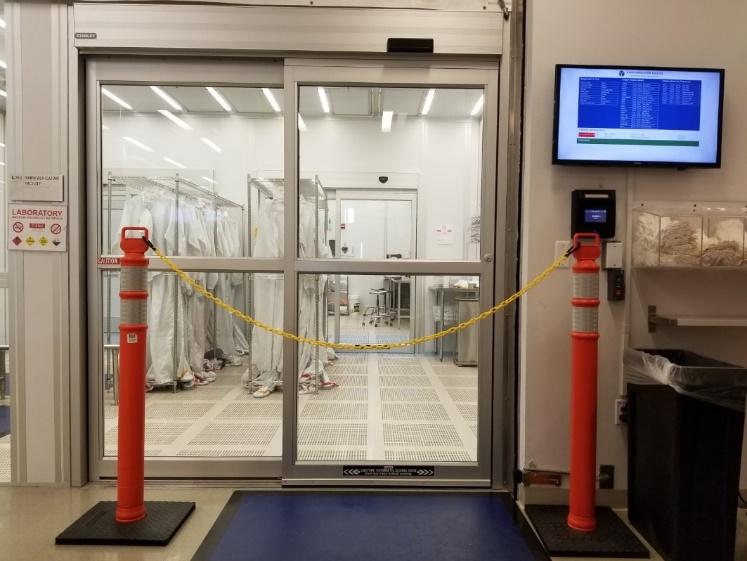
In the event of an emergency during after-hours, the entrance of the cleanroom will be blocked to prevent users from entering. The cleanroom will be closed until further notice.
-
C-14
-
A C-14 is a Certificate of Fitness for Non-Production Laboratories issued by FDNY. FDNY requires that permitted labs in New York City must be under the supervision of a C-14 holder. This means there must be at least one person on the ground floor of the ASRC if there is anyone working in the lab. During regular operating hours, facility staff are on-site and fulfill this requirement, but during after-hours, there is no guarantee that there are other C-14 holders on-site, so all members who wish to enter the cleanroom during after-hours must have a C-14.
-
There are different options for obtaining a C-14 for the ASRC address depending the level of degrees or certifications held by the member: (1) Members with a masters or doctoral degree or members with a bachelor’s degree and 2 years of post-baccalaureate experience in the operation of chemical laboratories may apply for alternative issuance, thus may apply online; (2) Those not eligible for the alternative issuance program will need to take the test at FDNY; (3) If you already have a C-14 issued for an address other than the ASRC, then you will only need to submit a copy of your current C-14 with a dual request letter from the ASRC.
-
APPLY ONLINE:
-
For 1st time C-14 applicants for the ASRC address, or if previous C-14 is more than 90 days past the expiration date, who are eligible to apply without taking a test (alternative issuance program), apply directly for your C-14 at https://nyc-business.nyc.gov/nycbusiness/description/cof-c14. You will need the following forms ready for the application:
-
Completed and notarized Applicant Affirmation Form - find a notary at local bank branches, UPS, FedE, online, amongst other locations.
-
Letter of recommendation and fee exemption – ASRC’s designated coordinator will need to physically sign the letter.
-
Application form A-20 – your name, mailing address, telephone number, email address, gender, social security number, date of birth, weight, height, and work location MUST be included, or your application will be rejected.
-
An electronic copy of your diploma or license file – your records must be translated to English by a certified translator if the original was not issued in English.
-
A recent ID photo – must be a 2x2 color head shot in JPG or JPEG format.
-
Copy of government issued ID – examples include US driving license, US permanent resident card, or passport issued by any country.
-
Copy of ASRC ID card.
-
APPLY IN PERSON:
-
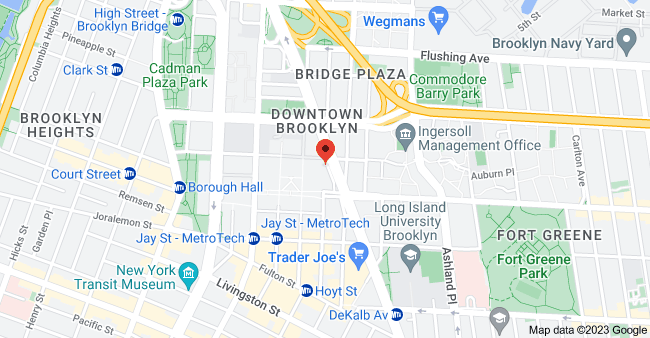
For those not eligible for the alternative issuance program, the test must be taken at FDNY, located at 9 MetroTech Center, 1st Floor, Brooklyn, NY 11201.
-
-
C-14 will be issued the same day at the FDNY office when the test has been satisfactorily completed.
-
Further instructions for applying in person can found at https://nyc-business.nyc.gov/nycbusiness/description/cof-c14/apply.
-
APPLY BY MAIL:
-
If a member already has a C-14 for an address other than the ASRC, they do not need to apply for a new certificate. They will need to submit a dual request letter with a copy of their current C-14 in order to receive an additional card specific to the ASRC address. Contact Tom Dickson (tdickson@gc.cuny.edu) in order to request the dual request form letter and provide a copy of the current C-14. Once the form letter is filled and then signed by ASRC’s designated coordinator, they will mail the request into FDNY for processing.
-
Once you have received your new C-14 card, you must bring it to the ASRC to be logged. Contact Tom Dickson (tdickson@gc.cuny.edu) in order to do this.
-
All C-14s have expiration dates, and any renewals must be submitted within 90 days past the expiration date. If your C-14 is over 90 days expired it will no longer be considered valid and you will lose after-hours access.
-
FDNY is sometimes inconsistent with issuing certificates, so if a member has successfully applied for a C-14 but FDNY has failed to issue the certificate in a timely manner, they may request after-hours from staff.
-
Keep in mind that a C-14 is not the only requirement for members to receive after-hours. Simply receiving a C-14 does not automatically impart after-hours access.
Bringing Materials and Objects into the Cleanroom
-
In order to maintain the cleanliness standards of the ASRC NanoFab, members are discouraged from bringing in extraneous items into the cleanroom.
-
Items such as a tweezers and other wafer handling equipment, glassware, and any other items necessary for performing work in the cleanroom should be stored in the storage area inside the cleanroom.
-
Any new item, not purchased through the ASRC cleanroom stockroom, must be first approved by ASRC NanoFab staff prior to bringing it in the cleanroom.
-
Members must unbox equipment, parts, etc. and remove packaging before bringing them into the cleanroom.
-
All items are to be wiped down with a damp IPA wipe before being brought out of the wipe-down/storage room and into the cleanroom area.
| Prohibited | Allowed |
|---|---|
| Cardboard boxes and containers | Plastic bins and containers |
| Regular paper and notebooks | Cleanroom paper and notebooks |
| Pencils | Pens |
| Hats and coats | Synthetic fabrics (polyester, nylon) |
| Cloth and felt items and covers | Paper items sealed in plastic |
-
Items NOT allowed in the cleanroom:
-
Wood pulp-based paper products, including regular paper, tissues, Kimwipes®, cardboard, books, magazines, and lab notebooks.
-
Styrofoam products, including packing material, disposable coolers, etc.
-
Any powders, powdered chemical samples, or materials that shed particles.
-
Food, gum, drinks, tobacco, cosmetics, or foam.
-
Eraser, pencils, felt-tipped pens other than Sharpie® markers.
-
Anything that can easily tear, shred, or efflux particles or plasticizers.
-
Notes can be taken on cleanroom notebooks or personal electronic devices.
-
All approved items that are brought into the cleanroom must be wiped down to remove dust particles and oil.
-
Lockers are available to store belongings, valuables, and prohibited items outside of the cleanroom.
Appropriate Attire
-
Full length pants must be worn at all times.
-
Only closed-toe shoes – no sandals, open-toe shoes, hi-heels or bare feet.
-
Shirts with shoulders covered.
-
Avoid clothing that is especially fuzzy or tends to produce a lot of lint or static electricity.
-
Do not wear makeup or perfume in the cleanroom. These introduce unnecessary contaminants to the cleanroom. If makeup stains the cleanroom suits or hoods, the suit will be considered damaged by the contactor that supplies the suits. Damaged suits are not cleaned but rather disposed of, and the facility will be charged for the damaged items.
Pre-Gowning Procedure
Shoe Cleaner
- Place your foot and shoe together inside. Hold the handle to steady yourself, then press the button. You’ll feel a slight tug on your shoe from the moving brushes. Clean each shoe for 5-10 seconds.
Bootie Butler
- Place shoe in bootie heal first, then toe. Pull straight back until bootie releases from the butler. Do not pull upward.
Face Mask
-
If working in the Class 100 areas, such as the lithography bay, the EBL rooms or the thermal oxidation furnace, put on face mask.
- If you have facial hair, a mask must be worn throughout the cleanroom.
Bouffant Cap
- Tuck all hair into hair net. Be careful to get all hair contained in the hairnet. Check yourself in the mirror in the gowning room to confirm that no hair is loose before you put on a hood.
Gloves
- Put on a snuggly fitting pair of cleanroom gloves.
Iris Scanner
Cleanroom access is controlled by a dual card/iris reader located to the right of the gowning room entrance.
Stand approximately 2” from the box and hold your card to the reader until the system begins its audio cues.
Align your eyes so that they are visible in the alignment mirror.
The yellow indicator dot will turn green when you reach a correct position.
Hold position until access is granted.
Gowning Procedure
-
Inspect gown for tears. If ripped or soiled, change gowns.
-
Put cleanroom hood over hair net.
-
Put on cleanroom suit – making sure no portion of the suit touches the floor. Tuck cleanroom hood into suit.
-
Put on cleanroom shoe covers overtop the booties and legs of the cleanroom jumpsuit.
The above attire must be properly worn before entering the cleanroom.
Housekeeping
-
Glassware/plasticware is to be properly rinsed, blown dry with nitrogen, and removed from the hood and stored in the storage racks or after use.
-
Personal or group owned glassware must be stored outside of the chemical hood.
-
Do not leave glassware/plasticware in the hoods to dry.
-
-
Used cleanroom wipes cannot be left in the hood.
-
All trash must be placed in the appropriate bins.
-
Empty chemical bottles must be triple rinsed with DI water, labeled, and placed on top of the caustics cabinet.
-
Chemical bottles containing chemicals are to be stored in their proper storage location.
-
Lithography spinners and surrounding area must be cleaned thoroughly after use.
-
Trionic gloves are only to be used and stored in designated areas.
-
Personal tools, materials, and glassware should be stored in the storage room when not in use.
-
It is each member’s responsibility to clean up their work area in preparation for the next member.
De-gowning Procedure
-
Remove shoe covers.
-
Remove cleanroom suit and hang on hanger.
-
Remove hood and snap the hood to the cleanroom suit.
-
Snap the shoe covers to the cleanroom suit.
-
Hang suit on the rack.
Do not throw away cleanroom suits into the trashcan.
Do not remove gloves, hairnet, facemask or booties until you’ve exited the gowning room out into the main hallway.
Tweezers and Glassware
-
It is recommended that members provide their own cleanroom compatible tweezers and glassware.
-
We cannot guarantee the cleanliness of the community tweezers and glassware.
-
We can provide storage bins to users who wish to store their items on-site.
-
NanoFab staff can recommend vendors and specific items that are known to work well with specific processes.
Badger
-
Once qualified for a tool, members can enable/disable and make reservations for a tool through Badger.
-
Read the Badger Instructions to learn how to use Badger.
-
During normal operating hours, reservations must be kept under 3 hours for tools that are heavily used.
-
Back-to-back reservations by one user are not allowed. Make reservations that are a single block of time.
-
Generally, if you are more than 15 minutes late to your reservation, you will lose your reserved time slot.
Slack
-
Join the NanoFab Slack Community by requesting an invitation.
-
Slack is used to facilitate discussions between and amongst members and staff.
-
Channels: use the channels to watch out for updates on specific tools, announcements across the lab, or notes on processes.
-
Direct Messaging: use the direct messages to get in touch with staff or with other members.
-
NanoFab01 Drive
-
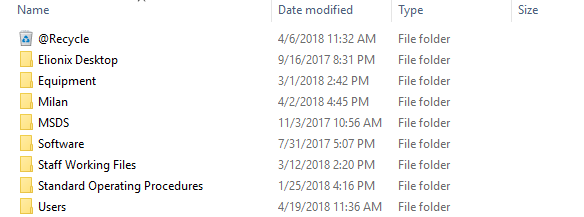
Most computers in the cleanroom are connected to the NanoFab01 Drive.
-
MSDS and Standard Operating Procedures are stored on this drive.
-
Members can save pictures, files, and data to their own folder under “Users”.
-
Citation Statement Requirement
-
When publishing or presenting results derived from use of equipment and services at the ASRC NanoFab, please use the following acknowledgement:
“This work was performed in part at the Advanced Science Research Center NanoFabrication Facility at the Graduate Center of the City University of New York.”
Statement of Acceptance
-
I will adhere to the guidelines provided in this document while a member of the ASRC NanoFabrication Facility and understand that failure to comply with any of the regulations will lead to revocation of privileges, suspension, and/or expulsion from the cleanroom.
-
When you register as a User of the ASRC NanoFabrication Facility, you will be directed to this document and asked to confirm your acceptance of the Rules of Conduct and Use.